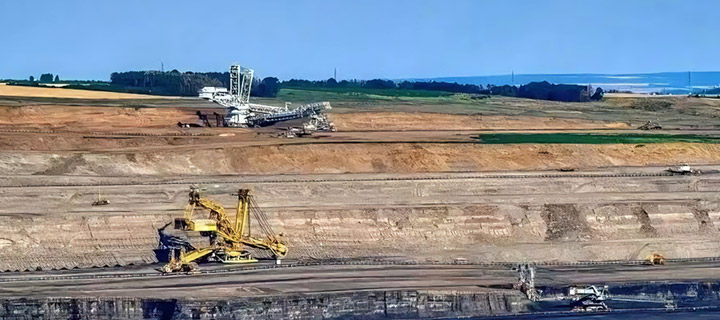
China Nonferrous Mining recently acquired a 55% stake in Kazakhstan's SM Minerals for US$89 million, bringing its total stake to 70% and securing full development rights to the Benkara copper-gold mine project. This transaction marks a significant breakthrough for China in its strategic mineral resource development in Central Asia.
The Benkara project, located in Aktobe Province, Kazakhstan, comprises mining rights in the north and exploration rights in the south, covering a total area of 34.3 square kilometers. The northern mining area has proven ore resources of 384 million tons, including 1.58 million tons of copper (average grade 0.41%), of which 940,000 tons are proven and inferred copper resources, accounting for 60%. The project also contains associated gold resources (grade approximately 0.1 g/t), but these are not yet included in the statistics; their value is expected to increase after future exploration.
According to the development plan, supplementary exploration fieldwork in the northern mining area was completed in July 2025. The feasibility study is expected to be completed and construction to commence in 2027, with production commencing in 2029. The project employs an open-pit mining and beneficiation model, designed to process 14 million tons of ore annually, producing approximately 45,000 tons of copper concentrate annually. The southern deposit is currently in the early exploration stage, reserving space for future resource expansion.
China Nonferrous Metal Mining Co., Ltd. (CNMC), a central enterprise managed by the State-owned Assets Supervision and Administration Commission of the State Council, has actively promoted its "going global" strategy since its establishment in 1983. Its overseas heavy nonferrous metal resources have reached over 20 million tons, with 9 mines and 9 smelters in more than 80 countries, forming a global layout covering Africa and Asia.
Kazakhstan is rich in mineral resources, possessing approximately 25% of the world's uranium, 16% of its chromite, and 28.5% of its tungsten, with copper reserves of approximately 20 million tons (eleventh globally). In 2024, the country adjusted its mining policy, setting the copper tax rate at 8.55% and encouraging the application of digital and green mining technologies, creating a favorable environment for foreign investment.
In Kazakhstan's mining market, international giant Glencore controls the Zhezkazgan smelter, with an annual production capacity of 400,000 tons of refined zinc, through Kazzinc, while Rusal owns the Pavlodar aluminum plant, with an annual production capacity of 600,000 tons of primary aluminum. Among Chinese companies, Zijin Mining acquired 100% equity in the RG gold mine in October 2025. This mine has resources of 208 million tons of ore, containing 197.4 tons of gold, and achieved a net profit of US$202 million in 2024.
It is worth noting that this year, Kazakhstan granted a 70% stake in the world's largest undeveloped tungsten mine project to the US-based Cove Capital LLC. A Chinese company that was close to signing the agreement unexpectedly withdrew, which the US views as a significant step towards reducing its reliance on China for key minerals.
With the acceleration of the global energy transition, Central Asia's strategic importance is increasingly prominent. In the coming years, international competition surrounding key minerals such as gold, copper, rare earths, lithium, and cobalt will intensify, and Kazakhstan and the entire Central Asia region may become a new focal point of great power rivalry. This acquisition by China Nonferrous Metals not only secured the supply of copper resources, but also laid the foundation for future resource development in Central Asia.
Reprinted from Mineral Frontier