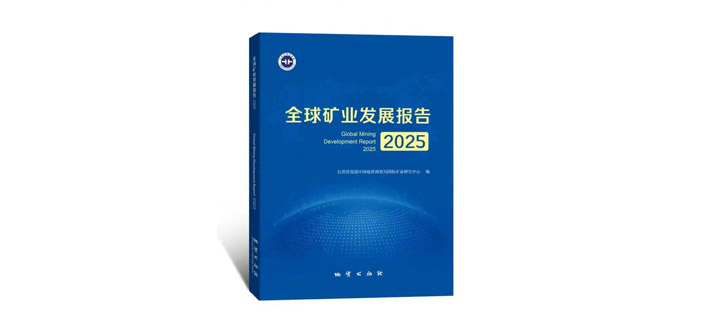
The "Global Mining Development Report 2025" points out that against the backdrop of "low-normal" global economic growth, the restructuring of the global mining industry chain and supply chain has intensified, exacerbating structural imbalances between supply and demand. Meanwhile, technological innovation, global governance, and green sustainability have become new engines of development, accelerating the industry's transition towards green, intelligent, and integrated full-chain development.
Exploration and development continued to contract. In 2024, global investment in major solid mineral exploration totaled USD 12.48 billion, a year-on-year decrease of 3.3%; the total number of drilling projects and boreholes decreased by 19.9% and 15.3%, respectively. Large-scale mining projects numbered 1,813, a year-on-year decrease of 1.4%.
The supply and demand structure showed a divergent trend: The growth in supply and demand for energy minerals slowed, and the delicate balance continued; among bulk solid minerals, the copper supply gap widened, zinc shifted to a supply shortage, steel supply surplus intensified, and aluminum surplus narrowed; strategic emerging minerals saw rapid growth in both supply and demand, though supply continued to outpace demand; among precious metals, silver and platinum had significant supply gaps, while gold was in surplus; agricultural minerals saw both supply and demand increase, with potash fertilizer surplus widening and phosphate fertilizer surplus contracting.
The market remained weak, with significant divergence in international mineral prices. Energy mineral prices surged before retreating, with average coal prices falling by over 20% year-on-year, iron ore prices dropping by over 30%, and prices of strategic emerging minerals continuing to decline. Share prices of major global mining companies fluctuated downwards, profitability weakened, solid mineral financing decreased by 11.7% year-on-year, and the total value and number of M&A transactions plummeted by 42.6% and 31.8%, respectively.
The report emphasizes that key minerals have become central to national resource strategies, intensifying global resource competition. Developed countries are promoting supply chain regionalization and industrial localization, while resource nationalism and trade barriers have heightened market fragmentation. Resource-rich countries are optimizing their governance frameworks by refining mining legislation, deepening mining policy reforms, and strengthening ESG practices. Meanwhile, technologies such as AI and 3D remote sensing are driving the industry towards digitalization and intelligentization.
The report predicts that expanding demand for new energy minerals will deepen great power competition, with resilience-oriented approaches replacing efficiency-first principles, and the industry will transform from a "labor-intensive" model to a "data-driven, intelligence-led, and green sustainable" model. The report calls on countries to strengthen mutually beneficial cooperation on key minerals, safeguard the stability of industrial and supply chains, work together to build a community with a shared future for the mining industry, and overcome the resource dilemma.